

Hey there! As a copper foil supplier, I often get asked about the dielectric constant of materials laminated with copper foil. So, I thought I'd take a deep - dive into this topic and share some insights with you all.
First off, let's talk about what the dielectric constant actually is. In simple terms, the dielectric constant (also known as relative permittivity) of a material is a measure of how much it can store electrical energy in an electric field compared to a vacuum. It's a dimensionless quantity that gives us an idea of how well a material can polarize in response to an applied electric field.
When we're dealing with materials laminated with copper foil, the dielectric constant becomes crucial in many applications. For example, in printed circuit boards (PCBs), the dielectric constant of the insulating material between the copper layers affects the signal propagation speed and impedance. A lower dielectric constant generally means faster signal propagation, which is super important in high - speed electronics.
Now, different materials used for lamination with copper foil have different dielectric constants. One of the most common materials is FR - 4, a glass - fiber epoxy laminate. FR - 4 has a dielectric constant that typically ranges from about 4.2 to 4.7 at 1 MHz. This value can vary depending on factors like the resin content, glass fabric style, and manufacturing process.
Another material is polyimide. Polyimide laminates are often used in flexible PCBs because of their high - temperature resistance and flexibility. The dielectric constant of polyimide is usually around 3.4 to 3.6 at 1 MHz. This relatively low dielectric constant makes it a great choice for high - frequency applications where signal integrity is key.
Ceramic - filled laminates are also popular. These materials have a wide range of dielectric constants, which can be tailored by adjusting the type and amount of ceramic filler. Some ceramic - filled laminates can have dielectric constants as high as 10 or more, while others can be designed to have lower values for specific applications.
The choice of the dielectric material and its constant depends on the specific requirements of the application. If you're working on a high - speed digital circuit, you might want a material with a low dielectric constant to minimize signal delay. On the other hand, if you're dealing with a power - related application, a higher dielectric constant might be acceptable or even beneficial.
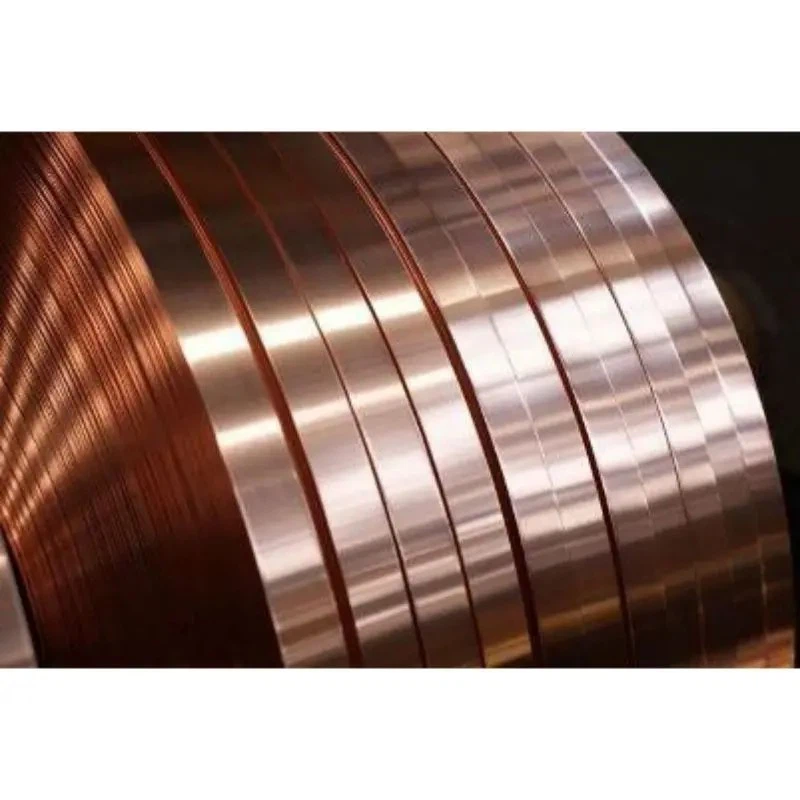
As a copper foil supplier, I've seen how different dielectric constants can impact the performance of the final product. That's why it's so important to understand the relationship between the copper foil and the laminated material. The copper foil itself is an excellent conductor, but the dielectric material around it plays a huge role in how the electrical signals behave.
Let's take a look at some of the products we offer at our company. We have Radiator Copper Foil, which is often used in heat - dissipation applications. The choice of the dielectric material laminated with this copper foil can affect its overall performance. For example, a material with good thermal conductivity and an appropriate dielectric constant can enhance both the heat - transfer and electrical properties.
Our Copper Foil For Transformer is another important product. In transformers, the dielectric constant of the insulating material between the copper windings is critical for maintaining the efficiency and performance of the transformer. A wrong choice of dielectric material can lead to energy losses and reduced lifespan of the transformer.
We also offer Double - sided Lithium Battery Copper Foil. In lithium - battery applications, the dielectric constant of the separator material (which can be considered a form of lamination in a way) affects the battery's internal resistance and charge - discharge efficiency. A material with the right dielectric constant can help improve the battery's performance and safety.
When it comes to choosing the right combination of copper foil and laminated material, there are a few things to keep in mind. First, consider the operating frequency of your application. High - frequency applications usually require materials with lower dielectric constants. Second, think about the mechanical properties of the material. If flexibility is important, like in flexible PCBs, you'll need a material that can bend without losing its electrical properties.
It's also a good idea to work closely with a materials expert or a supplier like us. We have the experience and knowledge to help you select the best copper foil and laminated material combination for your specific needs. We can provide samples for testing and offer technical support throughout the product development process.
If you're in the market for copper foil and are interested in learning more about the dielectric constant of laminated materials, don't hesitate to reach out. Whether you're a small - scale electronics hobbyist or a large - scale manufacturer, we're here to help you find the right solutions. We can discuss your requirements in detail and provide you with the best products at competitive prices.
In conclusion, understanding the dielectric constant of materials laminated with copper foil is essential for achieving optimal performance in various electrical and electronic applications. By choosing the right combination of copper foil and dielectric material, you can improve the efficiency, reliability, and overall quality of your products. So, if you have any questions or need assistance with your copper foil needs, feel free to contact us. We're looking forward to working with you and helping you take your projects to the next level.

References
- "Handbook of Electronic Materials"
- "Fundamentals of Electrical Engineering"
- Industry whitepapers on copper foil and dielectric materials