

Copper Bar
The Copper bar is a metal bar made of copper, featuring excellent electrical conductivity, thermal conductivity and mechanical strength. It is widely used in the following fields: In the electrical industry, copper bars are key materials for power transmission and distribution systems and are extensively applied in the manufacturing of wires and cables, distribution equipment and electronic circuit boards. Its high electrical conductivity ensures the stability of power transmission, while its corrosion resistance makes it perform well in humid environments. In the building and decorative copper bars, due to their excellent ductility and corrosion resistance, are often used in building pipelines, roof decoration materials and interior decoration projects. In the field of electronics, copper bars are used to manufacture electronic circuit boards, heat sinks and high-frequency circuit components. Its high conductivity and stability ensure the reliability of signal transmission, and at the same time, the electromagnetic shielding effect can be enhanced through surface treatment (such as copper plating).


Why choose us
Our Certificate
ISO9001, ISO14001, ISO45001, IATF16949. UL, CMA, SGS.
Sales Market
We export our products to over 20 countries around the world. These include the United States, countries in Europe, and nations in Southeast Asia.
Our service
Before shipment: Laboratory Test and Bulk Inspection.
Technical Parameters
|
Brand |
Composition & Physical Properties |
||||||||
|
GB |
JIS |
ASTM |
Cu |
Fe |
Pb |
Sn |
O |
P |
Zn |
|
T1 |
C1020 |
C10200 |
>99.95% |
- |
- |
- |
- |
- |
- |
|
T2 |
C1100 |
C11000 |
>99.90% |
- |
- |
- |
- |
- |
- |
|
Characteristics/Physical Performance |
|||||||||
|
Spec |
SG(g/cm) |
CTE(20-300℃) |
Thermal conductivity(20℃) |
%IACS(20℃) |
Micro.cm(20state) |
J/g/℃ |
KN/mm² |
||
|
GB |
JIS |
ASTM |
|||||||
|
T1 |
C1020 |
C10200 |
8.90 |
16.9 |
386.4 |
100 |
1.77 |
385 |
117 |
|
T2 |
C1100 |
C11000 |
8.90 |
16.9 |
386.4 |
97 |
1.77 |
385 |
117 |
|
Spec |
Status |
Tensile(N/mm2) |
Elongation% |
Hardness HV |
Curvature |
||||
|
GB |
JIS |
ASTM |
Angle |
Radius |
|||||
|
T1 |
C1020 |
C10200 |
O |
≥ 195 |
≥ 20 |
- |
180° |
0 T |
|
|
1/4H |
215-285 |
≥15 |
55-100 |
180° |
0.5 T |
||||
|
1/2H |
235-315 |
≥ 10 |
75-120 |
180° |
1.0 T |
||||
|
H |
≥ 275 |
- |
≥80 |
180° |
1.5 T |
||||
|
T2 |
C1100 |
C11000 |
O |
≥ 195 |
≥ 20 |
- |
180° |
0 T |
|
|
1/4H |
215-285 |
≥15 |
55-100 |
180° |
0.5 T |
||||
|
1/2H |
235-315 |
≥ 10 |
75-120 |
180° |
1.0 T |
||||
|
H |
≥ 275 |
- |
≥80 |
180° |
1.5 T |
||||
|
Copper Bar Busbar |
Width |
Thickness |
Length |
||||||
|
Size |
25mm - 300mm |
2mm - 80mm |
1m - 6.0m |
||||||
Key Advantages of Copper Bars
Here are the essential advantages of a copper bar and why it is the preferred material for projects requiring superior reliability and efficiency:
Superior Electrical Conductivity
A copper bar is known for its unparalleled electrical conductivity, making it the go-to material for efficient power transmission. This high conductivity minimizes energy loss, ensuring systems run at peak efficiency. In applications like electrical wiring and busbars, copper’s ability to carry more current with less heat generation is crucial.
High Thermal Conductivity
Copper’s high thermal conductivity lets it quickly dissipate heat and prevent overheating in electrical systems. Such property makes a copper bar ideal for transformers, heat exchangers, and other components where temperature control is critical. By efficiently managing heat, this material helps extend the lifespan of equipment and prevent failures.
Corrosion Resistance
A copper bar is highly resistant to corrosion and suitable for use in harsh environments where exposure to moisture, chemicals, or extreme temperatures is common. This resistance guarantees that copper maintains structural integrity and performance over time. Consequently, it requires less frequent maintenance and replacement, which leads to cost savings in long-term projects.
Durability and Mechanical Strength
Copper bars offer an excellent balance of mechanical strength and malleability, allowing them to withstand physical stress without cracking or breaking. Their durability guarantees reliable performance in demanding industrial applications. Additionally, copper’s malleability makes it easy to form into various shapes and sizes, facilitating its use in custom designs.
Ease of Joining and Fabrication
A bar made of superior copper can be easily joined using welding, soldering, or brazing, simplifying fabrication. Such ease of connecting allows seamless integration into complex systems and enhances design flexibility. As a result, copper is preferred in construction and industrial projects where precise connections are crucial.
Antimicrobial Properties
Copper has natural antimicrobial properties, which help inhibit the growth of harmful bacteria and viruses on its surface. This makes a copper bar particularly beneficial in environments that require stringent hygiene standards, such as hospitals, laboratories, commercial kitchens, and food processing facilities.
Sustainability and Recyclability
A copper bar is a fully recyclable material that can be reused indefinitely without losing quality. Such characteristics position copper as an environmentally friendly material choice, aligning with sustainable practices in industries focused on reducing waste and conserving resources. Copper’s recyclability also contributes to economic efficiency through lower material costs.
Electrical and thermal conductivity: Copper's ability to conduct electricity and heat efficiently makes copper bars perfect for applications like electrical components, switch contacts, and heat exchangers.
Corrosion resistance: The material's resistance to oxidation and corrosion contributes to its durability, which is valuable in many industrial applications.
Malleability and ductility
Copper bars can be easily fabricated, bent, and shaped without breaking, making them versatile for a wide range of applications and a good choice for machined parts.
Strength
Despite being malleable, copper bars possess good strength, making them suitable for construction, including beams for buildings and bridges.
Applications
Copper bars are used in electrical engineering, automotive, construction, HVAC systems, and manufacturing.
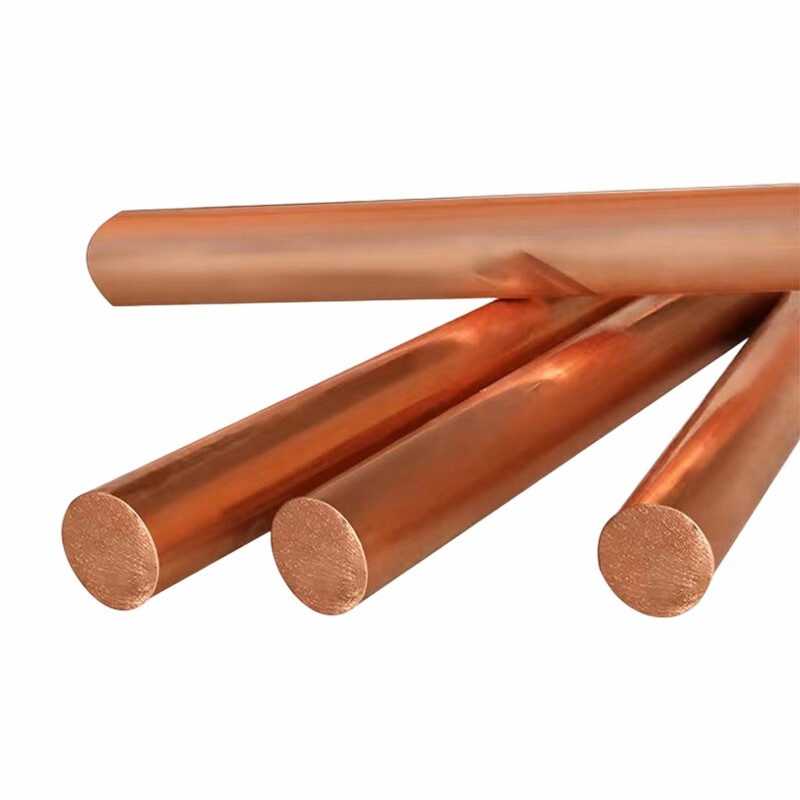
The production of copper bars begins with the extraction of copper ore. This raw material is mined from the earth and processed to produce pure copper. The quality of copper ore is crucial, as it directly affects the properties and value of the final copper bar. High-grade copper ore produces copper bars with superior electrical and thermal properties, making them more desirable in the market. As the demand for copper bars continues to rise, so too does the importance of sustainable mining practices to ensure a consistent supply of high-quality copper ore.
Copper Bar Packaging
Our Copper Bar is carefully handled during storage and transportation to preserve the quality of our product in its original condition.

FAQ
We're well-known as one of the leading copper bar manufacturers and suppliers in China. Please feel free to wholesale high quality copper bar from our factory. For customized service, contact us now.
high quality copper bar, copper bar, Oxygen free Copper Busbar