

Hey there! As an EDM wire supplier, I've been getting a lot of questions about how EDM wire actually works. So, I thought I'd take a few minutes to break it down for you.
First off, let's talk about what EDM stands for. It stands for Electrical Discharge Machining, which is a manufacturing process that uses electrical discharges (or sparks) to remove material from a workpiece. The EDM wire is a crucial part of this process, acting as the electrode that creates those sparks.
The basic working principle of EDM wire is pretty straightforward. You've got a spool of wire that's fed through a guide system and into the workpiece. The wire is constantly moving, usually at a speed of a few meters per minute. Meanwhile, the workpiece is submerged in a dielectric fluid, which is usually a type of oil or deionized water.
Now, here's where the magic happens. An electrical current is applied between the wire and the workpiece. When the wire gets close enough to the workpiece, a spark jumps across the gap, creating a tiny explosion. This explosion vaporizes a small amount of material from the workpiece, and the dielectric fluid flushes away the debris.
This process repeats itself thousands of times per second, gradually cutting through the workpiece. The wire is constantly being fed through the guide system, so it can maintain a consistent distance from the workpiece and keep the sparks flying.
One of the key advantages of EDM wire cutting is its precision. Because the sparks are so small, they can create very fine cuts with a high degree of accuracy. This makes EDM wire cutting ideal for applications where tight tolerances are required, such as in the aerospace and medical industries.
Another advantage is its ability to cut through hard materials. Since the cutting is done by electrical discharges, rather than mechanical force, EDM wire cutting can easily cut through materials that are too hard or brittle for traditional machining methods. This includes materials like tungsten carbide, titanium, and hardened steel.
Now, let's talk about the different types of EDM wire that we offer. We've got EDM Brass Wire, which is a popular choice for general-purpose EDM applications. Brass wire is relatively inexpensive and has good electrical conductivity, making it a great all-around option.

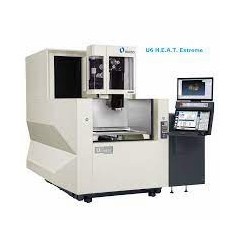
We also offer EDM Zinc-coated Wire, which is designed to improve cutting performance and reduce wire breakage. The zinc coating helps to protect the wire from corrosion and wear, and it also improves the electrical conductivity of the wire.
Finally, we have EDM Gamma Wire, which is a high-performance wire that's specifically designed for cutting thick or difficult-to-machine materials. Gamma wire has a unique composition that allows it to cut faster and more efficiently than other types of EDM wire.
So, there you have it! That's the basic working principle of EDM wire. If you've got any questions or if you're interested in learning more about our EDM wire products, don't hesitate to reach out. We're here to help you find the right wire for your application and to provide you with the support and expertise you need to get the job done right.
Whether you're a small shop looking to improve your machining capabilities or a large manufacturer in need of a reliable EDM wire supplier, we've got you covered. So, give us a call or send us an email today to start the conversation. We look forward to hearing from you!
References
- "Electrical Discharge Machining (EDM): Principles and Applications." ASM International Handbook Committee, ASM Handbook, Volume 16: Machining, ASM International, 2008.
- "EDM Wire Cutting: A Comprehensive Guide." Machining Technology Institute, 2015.