

Hey there! As an EDM wire supplier, I've seen firsthand how crucial every component is in the EDM wire - cutting process. One of the most under - rated yet super important elements is the dielectric fluid. So, let's dig into what role it plays in EDM wire cutting.
Basic Understanding of EDM Wire Cutting
Before we jump into the role of dielectric fluid, let's quickly go over what EDM wire cutting is. EDM, or Electrical Discharge Machining, is a manufacturing process where a thin wire (like EDM Brass Wire, EDM Gamma Wire, or EDM Zinc - coated Wire) is used as an electrode to cut through electrically conductive materials. The wire moves through the workpiece, and a series of rapid electrical discharges between the wire and the workpiece erode the material, shaping it into the desired form.
Cooling Effect
One of the primary roles of dielectric fluid in EDM wire cutting is cooling. The electrical discharges generate a whole lot of heat. If this heat isn't managed properly, it can cause all sorts of problems. For example, excessive heat can lead to thermal damage to the wire, making it brittle and more likely to break. It can also cause the workpiece to warp or develop internal stresses, which can affect its mechanical properties.

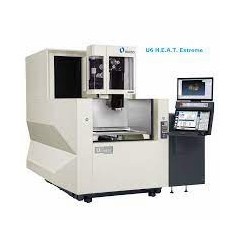
The dielectric fluid acts as a coolant, absorbing the heat generated during the electrical discharges. It circulates around the wire and the workpiece, carrying the heat away and dissipating it. This helps to maintain a stable temperature during the cutting process, ensuring that both the wire and the workpiece remain in good condition. Without proper cooling, the EDM wire - cutting process would be extremely unreliable and could result in a lot of wasted materials and time.
Debris Flushing
Another key role of the dielectric fluid is debris flushing. When the electrical discharges erode the workpiece, tiny particles of the material are removed. These particles, known as debris or chips, need to be removed from the cutting area. If they're left in the cutting area, they can interfere with the electrical discharges, causing inconsistent cutting and poor surface finish.
The dielectric fluid is pumped through the cutting area at a high velocity. This high - velocity flow of fluid flushes the debris away from the wire and the workpiece. It carries the debris out of the cutting zone and into a filtration system, where the debris is removed from the fluid. This ensures that the cutting area remains clean and that the electrical discharges can occur smoothly.
Proper debris flushing is essential for achieving a high - quality cut. If the debris isn't removed effectively, it can cause short - circuits between the wire and the workpiece, leading to uneven cutting and rough surfaces. It can also cause the wire to break, as the debris can get caught between the wire and the workpiece, putting extra stress on the wire.
Insulation
Dielectric fluid also acts as an insulator. In the EDM wire - cutting process, the electrical discharges need to occur at specific points between the wire and the workpiece. The dielectric fluid prevents the electrical current from flowing randomly through the fluid, ensuring that the discharges occur only at the intended locations.
It has a high dielectric strength, which means it can withstand a certain amount of electrical voltage without breaking down and allowing the current to flow freely. This property is crucial for controlling the electrical discharges and ensuring that the cutting process is precise. If the dielectric fluid didn't have good insulating properties, the electrical discharges would be erratic, and it would be impossible to achieve accurate cuts.
Surface Finish Improvement
The dielectric fluid can also have a significant impact on the surface finish of the workpiece. By cooling the workpiece and flushing away the debris, it helps to reduce the formation of rough edges and burrs. The fluid also helps to smooth out the surface of the workpiece by reducing the effects of the electrical discharges.
During the cutting process, the electrical discharges can create small craters on the surface of the workpiece. The dielectric fluid helps to fill these craters and smooth out the surface, resulting in a better - looking and more precise finish. This is especially important in applications where a high - quality surface finish is required, such as in the manufacturing of precision parts for the aerospace or medical industries.
Dielectric Fluid Selection
Selecting the right dielectric fluid is crucial for the success of the EDM wire - cutting process. Different fluids have different properties, and the choice of fluid depends on several factors, such as the type of workpiece material, the cutting speed, and the desired surface finish.
For example, some dielectric fluids are better suited for cutting hard materials, while others are more effective for achieving a high - quality surface finish. The viscosity of the fluid also matters. A fluid with too high a viscosity may not flush the debris effectively, while a fluid with too low a viscosity may not provide sufficient insulation.
As an EDM wire supplier, I often work with customers to help them select the right dielectric fluid for their specific applications. We take into account all the relevant factors and recommend a fluid that will work best with the EDM wire they're using, whether it's EDM Brass Wire, EDM Gamma Wire, or EDM Zinc - coated Wire.
Maintenance of Dielectric Fluid
Proper maintenance of the dielectric fluid is also essential. Over time, the fluid can become contaminated with debris, metal particles, and other impurities. This can reduce its effectiveness as a coolant, insulator, and debris flushing agent.
Regular filtration is necessary to remove the contaminants from the fluid. The filtration system should be designed to capture particles of different sizes, ensuring that the fluid remains clean. The fluid also needs to be monitored for its dielectric strength, pH level, and other properties. If the properties of the fluid change significantly, it may need to be replaced or treated to restore its performance.
Conclusion
In conclusion, the dielectric fluid plays a vital role in EDM wire cutting. It cools the wire and the workpiece, flushes away debris, acts as an insulator, and improves the surface finish of the workpiece. Selecting the right dielectric fluid and maintaining it properly are crucial for the success of the EDM wire - cutting process.
If you're in the market for EDM wire or have any questions about the EDM wire - cutting process, including the role of dielectric fluid, don't hesitate to reach out. I'm here to help you find the best solutions for your manufacturing needs. Whether you need EDM Brass Wire, EDM Gamma Wire, or EDM Zinc - coated Wire, I can provide you with high - quality products and expert advice.
References
- "Electrical Discharge Machining: Principles and Applications" by X. Liang and Y. Shen
- "Advanced Machining Processes" by P. K. Jain
- Industry reports on EDM wire - cutting technology