

Hey there! As a copper foil supplier, I often get asked all sorts of questions about our products. One question that pops up more than you'd think is, "What is the magnetic permeability of copper foil?" Let's dig into this topic and break it down in a way that's easy to understand.
First off, let's talk a bit about what magnetic permeability actually means. In simple terms, magnetic permeability is a measure of how well a material can support the formation of a magnetic field within itself. It's like a material's "magnetic friendliness." Materials with high magnetic permeability can easily let magnetic fields pass through them and can even enhance those fields. On the other hand, materials with low magnetic permeability don't play well with magnetic fields and tend to resist their influence.
Now, copper is a fascinating metal. It's known for its excellent electrical conductivity, which is why it's used in so many electrical applications. But when it comes to magnetism, copper is what we call a diamagnetic material. Diamagnetic materials have a very low magnetic permeability, and they actually create a weak magnetic field in the opposite direction of an applied magnetic field. This means that copper foil doesn't really "like" to be magnetized.
The magnetic permeability of copper is extremely close to that of a vacuum, which has a relative magnetic permeability of exactly 1. For copper, the relative magnetic permeability is about 0.999994 at room temperature. That's so close to 1 that for most practical purposes, we can consider it to be effectively non - magnetic. This property makes copper foil ideal for applications where you don't want magnetic interference.
Let's take a look at some of the applications where the low magnetic permeability of copper foil comes in handy.
Electrical and Electronic Applications
In the world of electronics, copper foil is used extensively. For example, in printed circuit boards (PCBs), copper foil is used to create the conductive pathways that carry electrical signals. Since copper is non - magnetic, it doesn't introduce any unwanted magnetic fields that could interfere with the delicate electronic components on the board. This ensures that the signals can travel smoothly and without distortion.
Another application is in electromagnetic shielding. When you need to protect sensitive electronic equipment from external magnetic fields, copper foil can be used as a shield. Its low magnetic permeability means that it can block or reduce the penetration of magnetic fields, keeping the equipment inside safe and sound.
Battery Applications
Copper foil is also a key component in batteries, especially lithium - ion batteries. Our Double - sided Lithium Battery Copper Foil is designed to provide a stable and efficient current collector. The non - magnetic nature of copper is crucial here because it doesn't interact with the magnetic fields that might be present in the battery environment. This helps to maintain the battery's performance and longevity.
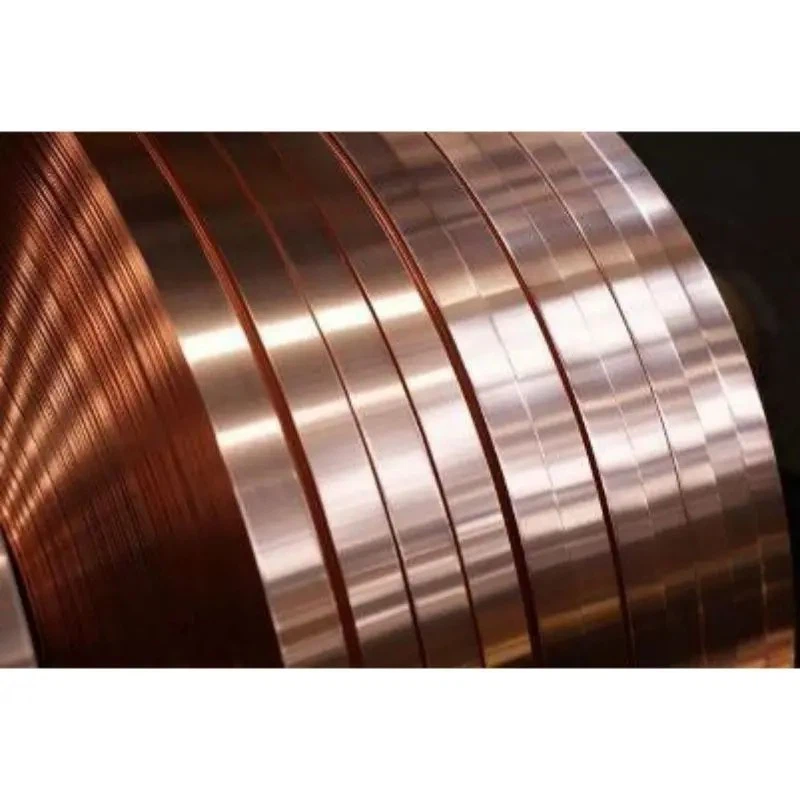

Heat Dissipation Applications
In heat dissipation applications, such as radiators, copper foil's low magnetic permeability is an added bonus. Our Radiator Copper Foil is used to transfer heat away from hot components. Since it's non - magnetic, it won't cause any magnetic interference with other nearby components, making it a reliable choice for heat management.
Mechanical Applications
In some mechanical applications, copper foil's non - magnetic property can be beneficial. For example, in precision instruments where even the slightest magnetic interference can affect the accuracy of measurements, using copper foil can help to eliminate this problem. Our Hard Drawn Copper Foil is strong and durable, and its non - magnetic nature makes it suitable for such applications.
Now, you might be wondering how we measure the magnetic permeability of copper foil. Well, there are several methods, but one of the most common is the use of a magnetic susceptibility meter. This device measures the magnetic susceptibility of a material, which is related to its magnetic permeability. By measuring the magnetic susceptibility of copper foil samples, we can determine their magnetic permeability accurately.
It's also important to note that the magnetic permeability of copper foil can be affected by factors such as temperature and impurities. At very low temperatures, the magnetic properties of copper can change slightly. And if there are impurities in the copper foil, they can also have an impact on its magnetic permeability. That's why we take great care in the manufacturing process to ensure that our copper foil has consistent and high - quality properties.
As a copper foil supplier, we understand the importance of providing our customers with products that meet their specific needs. Whether you're looking for copper foil for electrical, battery, heat dissipation, or mechanical applications, we've got you covered. Our team of experts is always on hand to answer any questions you might have and to help you choose the right copper foil for your project.
If you're in the market for high - quality copper foil, don't hesitate to get in touch. We're here to assist you with your procurement needs and to ensure that you get the best product at a competitive price. Whether you need a small quantity for a prototype or a large order for mass production, we can accommodate your requirements.
So, if you're interested in learning more about our copper foil products or have any questions about magnetic permeability or other properties, just reach out. We're eager to start a conversation and help you find the perfect copper foil solution for your business.
References
- "Introduction to Electromagnetic Fields and Waves" by Constantine A. Balanis
- "Handbook of Copper and Copper Alloys" by ASM International