

Hey there! As a copper rod supplier, I often get asked about the fire - resistance properties of copper rods. So, I thought I'd write this blog to share some insights on this topic.
First off, let's understand what we mean by fire - resistance. Fire - resistance refers to a material's ability to withstand fire or heat without losing its structural integrity or functionality. When it comes to copper rods, they have some unique characteristics that give them certain fire - resistant qualities.
Copper has a relatively high melting point. The melting point of pure copper is around 1083 °C (1981 °F). This means that in most common fire situations, copper rods won't melt right away. For instance, in a typical building fire, the temperature usually doesn't reach the melting point of copper. The average temperature in a room fire can range from 600 - 900 °C (1112 - 1652 °F), depending on various factors like the type of fuel, ventilation, etc. So, in these scenarios, copper rods can maintain their shape and structure for a certain period.
Another important aspect is copper's thermal conductivity. Copper is an excellent conductor of heat. This might seem counter - intuitive when talking about fire - resistance, but it actually works in its favor. When exposed to heat, copper quickly conducts the heat away from the source. This helps in preventing localized overheating and reduces the risk of the copper rod catching fire or melting at a single point. For example, if a part of a copper rod is near a heat source, the heat will spread along the rod, and the overall temperature increase will be more evenly distributed.
Let's talk about some real - world applications where the fire - resistance of copper rods comes in handy. In electrical wiring, copper rods are widely used. Electrical fires can be a serious hazard, but the high melting point and good thermal conductivity of copper rods make them a safer choice. They can carry electrical current even under elevated temperatures without melting easily, reducing the risk of short - circuits that could lead to more severe fires.
In industrial settings, copper rods are used in heat exchangers. These devices often operate in high - temperature environments. The fire - resistant properties of copper rods ensure that they can handle the heat and maintain their performance over time. They can transfer heat efficiently without being damaged by the high temperatures, which is crucial for the smooth operation of industrial processes.
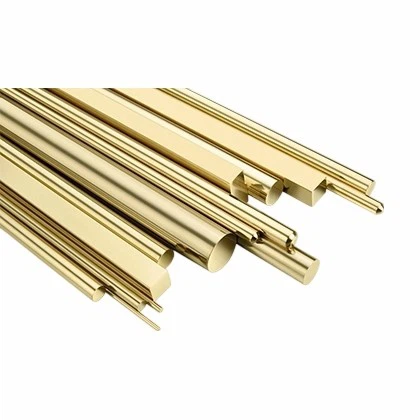

Now, let's look at some of the different types of copper rods we offer as a supplier. We have the Free - cutting Copper Rod. This type of copper rod is designed for easy machining. It still retains the basic fire - resistant properties of copper. The free - cutting feature makes it ideal for applications where precision machining is required, such as in the production of electrical components.
Our Tinned Copper Rod is another option. The tin coating on the copper rod provides additional protection against corrosion. In fire situations, this coating can also act as a barrier to some extent, delaying the oxidation of the copper and maintaining its structural integrity for a longer time.
We also offer Copper - based Heat Sinks. These are designed to dissipate heat quickly. Their fire - resistant properties ensure that they can function effectively even in high - temperature environments, protecting sensitive electronic components from overheating.
However, it's important to note that while copper rods have good fire - resistant properties, they are not completely fire - proof. In extremely high - temperature situations, such as in a furnace where temperatures can exceed 1200 °C (2192 °F), copper rods will eventually melt. Also, prolonged exposure to fire can cause oxidation of the copper surface, which may affect its performance over time.
To test the fire - resistance of copper rods, various methods are used. One common method is the fire endurance test. In this test, a sample of the copper rod is exposed to a controlled fire for a specific period. The temperature, time, and the condition of the rod are monitored. If the rod maintains its structural integrity and functionality within the specified time frame, it passes the test.
As a copper rod supplier, we ensure that all our products meet the relevant industry standards for fire - resistance. We source high - quality copper and use advanced manufacturing processes to produce copper rods with consistent fire - resistant properties.
If you're in the market for copper rods and are concerned about their fire - resistance, we're here to help. Our team of experts can answer all your questions and provide you with the right product for your specific needs. Whether you're working on an electrical project, an industrial application, or any other use case, we have the copper rods to suit your requirements.
So, if you're interested in learning more or making a purchase, don't hesitate to reach out. We're ready to have a detailed discussion with you about how our copper rods can meet your fire - resistant needs and other performance requirements. Contact us today to start the procurement process and let's find the perfect copper rod solution for you.
References
- "Handbook of Copper and Copper Alloys"
- "Fire Protection Handbook"
- Industry reports on copper rod applications in high - temperature environments