

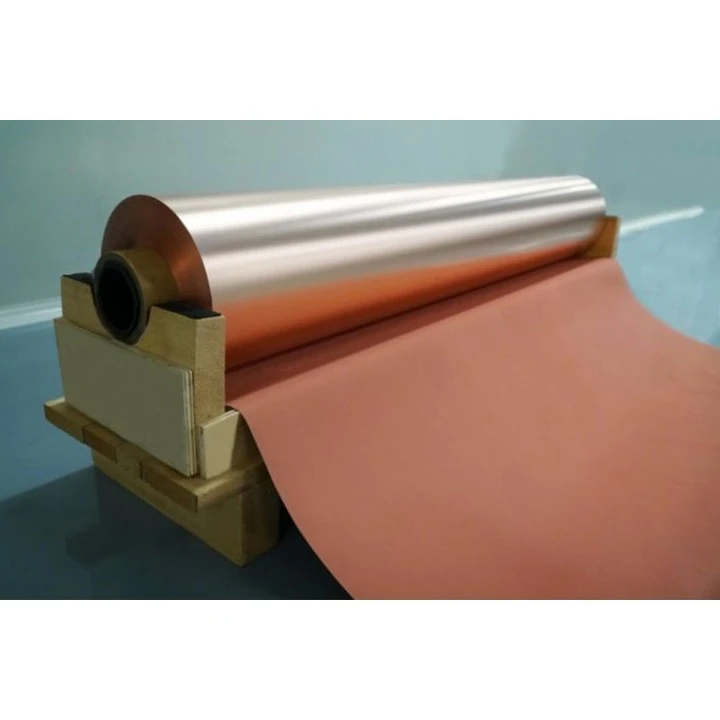
Rolled copper foil is a key material in the manufacturing of printed circuit boards (PCBs), offering unique properties that make it indispensable in this high - tech field. As a trusted rolled copper foil supplier, I am excited to explore the various applications of rolled copper foil in PCBs and share insights into its significance.
1. Electrical Conductivity and Signal Transmission
One of the most fundamental applications of rolled copper foil in PCBs is its use as a conductor for electrical signals. Rolled copper has excellent electrical conductivity, second only to silver among common metals. This high conductivity allows for efficient transmission of electrical current across the PCB, minimizing power loss and signal attenuation.
In modern electronic devices, such as smartphones, laptops, and high - performance servers, the demand for high - speed data transmission is ever - increasing. Rolled copper foil provides a reliable pathway for electrical signals, enabling the smooth operation of complex circuits. For example, in high - frequency PCBs used in 5G communication equipment, the low resistance of rolled copper foil helps to maintain signal integrity at high frequencies, reducing the occurrence of signal distortion and interference.

2. Circuit Pattern Formation
Rolled copper foil serves as the base material for creating circuit patterns on PCBs. Through a series of manufacturing processes, including photolithography and etching, the copper foil is selectively removed to form the desired circuit layout. The smooth surface and uniform thickness of rolled copper foil are crucial for achieving precise circuit patterns.
The high ductility of rolled copper foil allows it to be easily processed into fine - pitched circuits. In advanced PCBs, such as those used in high - end graphics cards and artificial intelligence chips, the ability to create narrow traces and small vias is essential for increasing circuit density and functionality. Rolled copper foil can meet these requirements, enabling the production of highly integrated PCBs with complex circuit designs.
3. Heat Dissipation
In addition to its electrical functions, rolled copper foil also plays an important role in heat dissipation on PCBs. Electronic components generate heat during operation, and excessive heat can affect the performance and reliability of the device. Rolled copper foil has good thermal conductivity, which can effectively transfer heat away from the heat - generating components.
For instance, in power - hungry PCBs, such as those used in power supplies and automotive electronics, rolled copper foil can be used as a heat sink. The copper foil spreads the heat over a larger area, allowing it to be dissipated more efficiently through convection and radiation. Some PCBs even use Radiator Copper Foil, which is specifically designed for enhanced heat dissipation performance.
4. Mechanical Support
Rolled copper foil provides mechanical support to the PCB structure. It helps to maintain the rigidity and stability of the board, preventing it from warping or bending during the manufacturing process and in actual use. The high tensile strength of rolled copper foil is beneficial in this regard.
High Tensile Strength Copper Foil is often used in applications where the PCB may be subjected to mechanical stress, such as in automotive and aerospace electronics. These environments require PCBs to withstand vibrations, shocks, and temperature variations without losing their functionality. The strong mechanical properties of high - tensile - strength rolled copper foil ensure the long - term reliability of the PCBs in such harsh conditions.
5. Shielding
Electromagnetic interference (EMI) is a common problem in electronic devices, which can cause malfunctions and reduce the performance of the equipment. Rolled copper foil can be used as an EMI shielding material on PCBs. It forms a conductive barrier that blocks electromagnetic waves from entering or leaving the PCB, protecting the sensitive electronic components from interference.
In PCBs used in communication devices, medical equipment, and military electronics, EMI shielding is of utmost importance. The copper foil can be applied as a layer on the surface of the PCB or used to enclose specific components. This shielding function helps to ensure the proper operation of the device and complies with the relevant electromagnetic compatibility (EMC) standards.
6. Battery Connection in PCBs
In some PCBs, especially those used in portable electronic devices and electric vehicles, rolled copper foil is used for battery connections. The excellent electrical conductivity of copper foil allows for efficient power transfer between the battery and the electronic components on the PCB.
Double - sided Lithium Battery Copper Foil is commonly used in lithium - ion battery PCBs. It provides a stable and reliable connection for charging and discharging the battery, ensuring the safety and performance of the battery system. The double - sided design of the copper foil allows for better electrical contact and heat dissipation, which is crucial for the long - term operation of the battery.
7. Compatibility with PCB Manufacturing Processes
Rolled copper foil is highly compatible with various PCB manufacturing processes. It can be easily laminated onto the substrate material, such as fiberglass - reinforced epoxy resin, using adhesives or heat - pressing methods. This compatibility ensures a strong bond between the copper foil and the substrate, which is essential for the overall quality and reliability of the PCB.
Moreover, rolled copper foil can withstand the chemical processes involved in PCB manufacturing, such as etching and plating. It does not react with the chemicals used in these processes, maintaining its integrity and performance throughout the manufacturing cycle.
Why Choose Our Rolled Copper Foil?
As a leading rolled copper foil supplier, we are committed to providing high - quality products that meet the diverse needs of the PCB industry. Our rolled copper foil is manufactured using advanced production techniques, ensuring excellent electrical and mechanical properties.
We offer a wide range of rolled copper foil products, including different thicknesses, widths, and surface treatments, to suit various PCB applications. Our quality control system is strict, and each batch of products undergoes comprehensive testing to ensure compliance with international standards.
Whether you are a PCB manufacturer looking for reliable materials for high - speed data transmission, heat dissipation, or EMI shielding, or a battery manufacturer in need of high - performance copper foil for battery connections, we have the right solution for you.
Contact Us for Procurement
If you are interested in our rolled copper foil products and would like to discuss your specific requirements, please feel free to contact us. We are eager to have in - depth discussions with you and provide you with detailed product information and competitive pricing. Our professional sales team is ready to assist you in finding the most suitable rolled copper foil for your PCB applications.
References
- "Printed Circuit Board Technology" by John Doe, published by ABC Publishing.
- "Advanced Materials for Electronic Devices" edited by Jane Smith, published by XYZ Press.
- Industry reports on the PCB and copper foil market from well - known market research firms.